(Video) OTTRS Speaker Series: Promoting Astronaut Autonomy in Human Spaceflight Missions
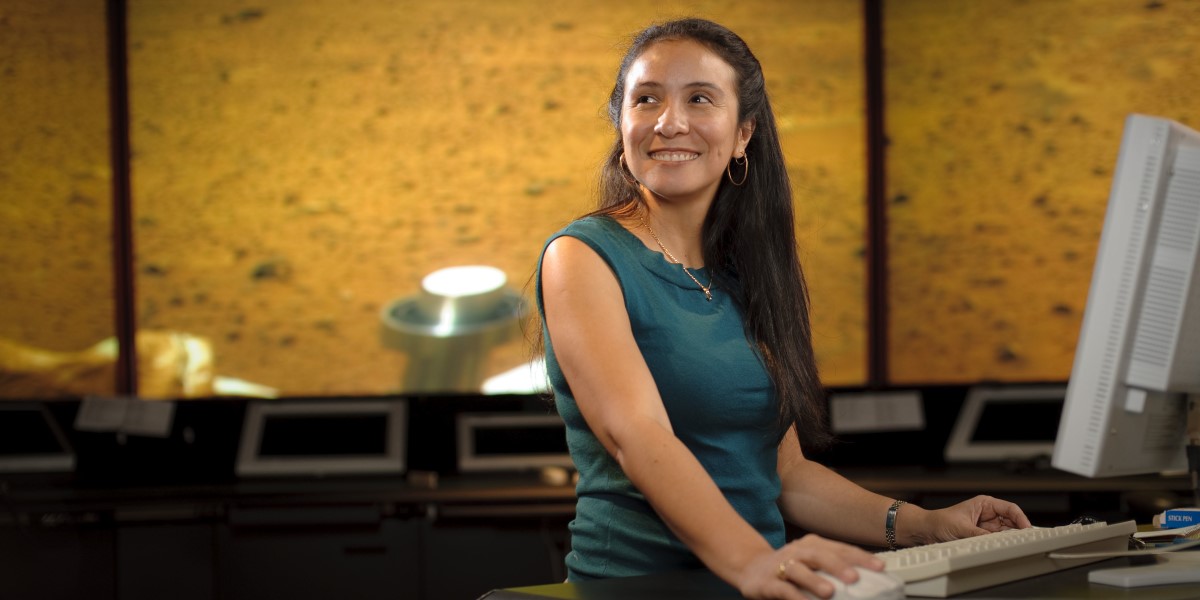
Jessica Marquez, human systems engineer at NASA, spoke about supporting long distance spaceflight.
We are going to the moon to learn to live on other planets. This is NASA’s latest directive—a call to work and explore far reaches of space—and it requires mission operations to adapt for long duration human spaceflight. An issue astronauts will have to deal with is prolonged periods of no communication with ground flight controllers. The crew’s ability to work more independently from mission control will be a key enabler in future exploration missions.
Over the last several years, the NASA Ames Human-Computer Interaction (HCI) Group has investigated various ways to promote and support astronaut autonomy in human spaceflight missions. From integrated Internet of Things for Space, advanced procedures interfaces, comm-delayed chats, and self-scheduling tools, the HCI Group has explored different ways to support astronaut autonomy. Specifically, the self-scheduling tool Playbook has been evaluated in analog extreme environments and onboard the International Space Station, successfully paving the way for future autonomous astronauts.
Jessica Marquez, who delivered a talk about this topic on February 24, has been working at the NASA Ames Research Center within the Human Systems Integration Division since 2007. As part of the HCI Group, she has supported the development and deployment of planning and scheduling software tools for various space missions, including the International Space Station Program. She now leads the team that is developing Playbook. Her work has led to supporting different NASA analog missions that simulate planetary missions and spacewalks. She also is a subject matter expert for space human factors engineering, specifically in human-automation-robotic integration.
Watch a recording of the talk: