Camille Nebeker In Conversation With PERVADE
Date/Time: Wednesday, September 14, 2022 1:00 pm - 2:30 pm
Location: Virtual EST
In this conversation with the PERVADE team, Dr. Camille Nebeker will share her experiences as Director of the Research Center for Optimal Digital Ethics (ReCODE), including her insights on building tools to help researchers navigate ethical issues of risk assessment, informed consent, and how to report back to the communities they study. Register Here
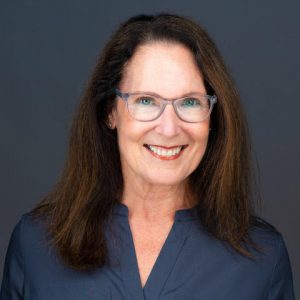
Dr. Camille Nebeker
Speaker Bio: Dr. Camille Nebeker, EdD, MS, is an Associate Professor with appointments in the UC San Diego Design Lab and the Wertheim School of Public Health. She is director of the UC San Diego Research Ethics Program and affiliated with the Institute of Practical Ethics. She co-founded and directs the ReCODE Health center, which provides education and consultation services to guide ethical practices in technology-supported health research. Dr. Nebeker applies a human centered design approach to shape ethical research practices (e.g., risk assessment, informed consent, return of results), which has led to development of decision support tools (see: Digital Health Checklist and Framework and Connected and Open Research Ethics platform). She serves as a member of the World Health Organization Digital Health Roster of Experts, American Association for the Advancement of Science Committee on Scientific Freedom and Responsibility, IEEE Organizational Governance of AI Working Group and the Society of Behavioral Medicine Digital Health Council. Dr. Nebeker’s research has received support from federal, foundation and industry sources including the NSF, NIH, Office of Research Integrity, RWJF and IBM. Publications related to her work are accessible via: https://escholarship.org/uc/recodehealth_publications.
Host Bio: Dr. Michael Zimmer, PhD, is a privacy and data ethics scholar whose work focuses on digital privacy & surveillance, the ethics of big data, internet research ethics, and the broader social & ethical dimensions of emerging digital technologies. Dr. Zimmer is an Associate Professor in the Department of Computer Science at Marquette University, and Director of the Center for Data, Ethics, and Society. He is an Affiliated Fellow at the Information Society Project at Yale Law School, as well as the Northwestern Mutual Data Science Institute.
What is PERVADE? PERVADE was conceived by an NSF-supported research coordination network. The information provided by networked information technologies, such as the internet of things, wearable devices, ubiquitous sensing, and social sharing platforms increases the flow of rich, but often personal, information. The growth in the scale, scope, speed, and depth of human data research—what we call pervasive data practices—requires reconsideration of fundamental ethical assumptions.
Through research and assessment, PERVADE was founded for the purpose of quantifying the risks to individuals and groups who provide this data. We seek to learn how people experience the reuse of their personal data. We also advocate how existing ethical codes should be adapted and adopted for computational research.